
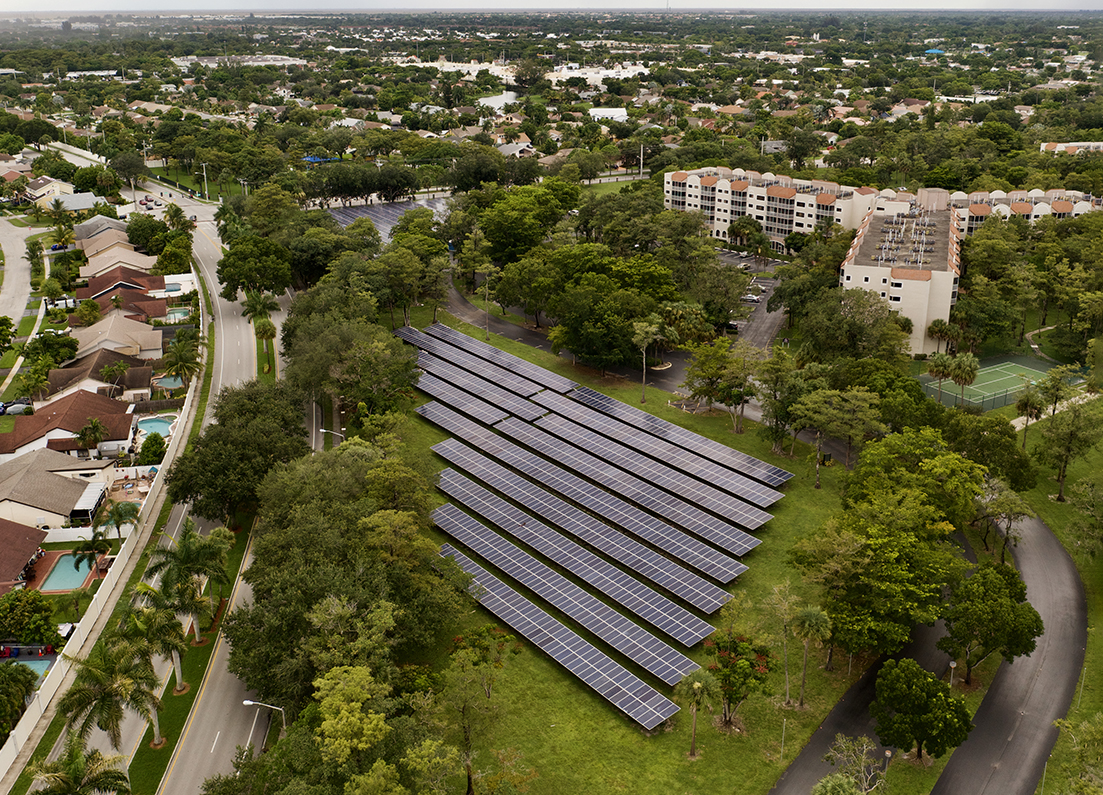
Florida’s green-business story is not just future-oriented; it is now. Solar research, EV infrastructure build-out, and sustainability-minded hospitality are intersecting to form a vibrant sector that ties climate action, lifestyle aspirations, and commercial strategy. For the Florida business community, the opportunity lies in leveraging the state’s natural advantages, aligning with rising consumer/employee expectations, and acting early in key infrastructure segments.
As the world increasingly turns to sustainability, Florida’s business community is leaning into a new paradigm: green enterprise. Across the Sunshine State, solar-technology startups, electric-vehicle (EV) infrastructure projects, and eco-minded hospitality ventures are coalescing into a business ecosystem that merges lifestyle, innovation, and investment. For local companies, adopting renewable-energy and sustainable-design strategies isn’t just good for the planet—it’s becoming good for business.
One of Florida’s foundational green-business assets is the Florida Solar Energy Center (FSEC) at the University of Central Florida (UCF). Established in 1975, the Center has spent nearly five decades researching solar, storage, building efficiency, and transportation-electrification systems in Florida’s hot, humid climate.
Florida is among the national leaders in solar deployment: as of 2024, the state ranked third in the U.S. for new solar additions, with more than 9,500 MW installed.
Despite this growth, Florida’s overall electricity system remains heavily fossil-fuel based. In 2024, the state’s power-sector dependency on fossil fuels rose above 77 %.
The upshot for local businesses: solar isn’t a fringe opportunity, it’s becoming a mainstream competitive edge.
On the transportation front, Florida is making measurable forward momentum. According to a 2025 report by the Electrification Coalition, Florida had approximately 321,000 registered battery-electric vehicles and over 11,500 public charging ports, reflecting a roughly 10.2 % share of EV market penetration in the state.
The state’s Florida Department of Transportation mandated the development of an Electric Vehicle Infrastructure Master Plan to build charging stations along key corridors and support long-term EV adoption.
An April 2024 study noted that Florida already counted more than 2,000 publicly available EV charging stations statewide.
For entrepreneurs, the message is clear: opportunities abound in installation, servicing, software, and convenience-charging offerings.
Bonus: local hotels, resorts, and retail centres that invest in EV-friendly infrastructure position themselves as premium lifestyle destinations.
Sustainability has also entered the hospitality sector in Florida in significant ways. For example, the Evermore Orlando Resort announced a partnership with Siemens to become one of North America’s first large-scale resorts with built-in fast EV-charging and smart infrastructure designed for sustainability.
Such developments reflect a broader trend: travelers increasingly expect eco-credentials, local businesses respond accordingly, and this cycle drives investment.
Florida’s warm climate, tourism base, and lifestyle branding make it well-positioned to lead in this “green luxury” hospitality niche.
Business Implications for Florida Companies
For local business owners and professionals reading Skyline Magazine Lifestyle, here are key takeaways:
- Dual investment payoff: Adopting solar or EV infrastructure may reduce operational/energy costs and enhance brand perception among eco-aware consumers and talent.
- Location advantage: Florida’s sunshine and warm weather give solar and outdoor-savvy hospitality advantages that colder states can’t replicate.
- New sectors, new jobs: Growth in EV infrastructure, solar installations, and green-certified design creates job opportunities for installers, tech personnel, hoteliers, and service providers.
- Incentives matter: As noted in Miami-Dade small-business programme data, grants of $5,000-$25,000 exist for businesses installing EV charging or green upgrades.
- Look ahead to risk-mitigation: Especially in Florida’s climate-sensitive context (hurricanes, flooding), sustainable design is increasingly a business continuity issue, less about “nice to have,” more about resilience.
- Monitoring technology: With FSEC’s lab capabilities for solar-module testing and durability in humid climates, firms can tap R&D insights into what works best in Florida conditions.
- Charging as a service: As EV adoption grows, businesses aligned with hospitality, retail, and real estate can explore hosting charging stations or value-added services around them.
- Sustainability branding: Being green is a differentiation point. For Florida businesses competing for remote workers, tourism dollars, or relocations, it matters.
- Policy monitoring: For example, Florida’s lack of some solar tax incentives and its continued fossil-heavy electricity mix make timing and strategy important.