
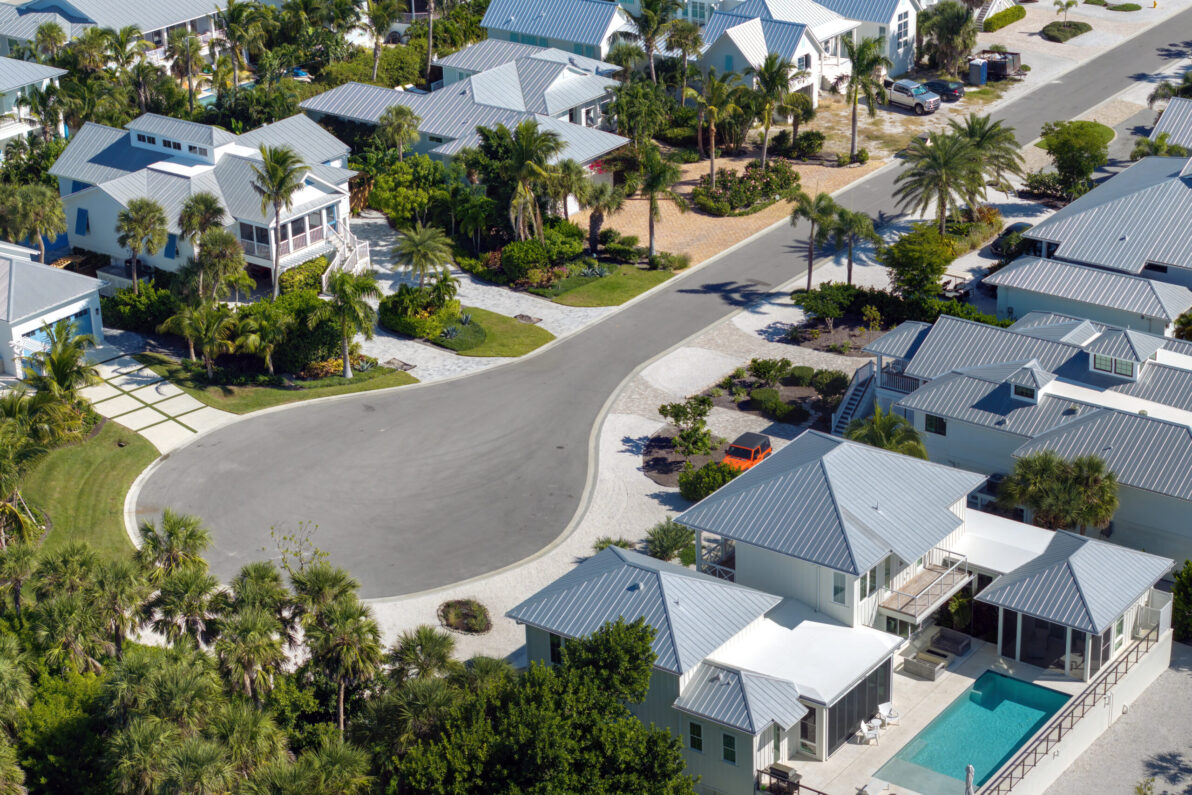
Florida’s real-estate market enters 2026 with a clear signal for investors: the Sunshine State remains not just a lifestyle destination, but a strategic investment frontier. From housing and multifamily rentals to commercial-office conversion and mixed-use development, Florida continues to attract capital even as national markets face slowing momentum. The reasons are rooted in population growth, affordability relative to legacy markets, and strong fundamentals, but they also require nuance and selective execution.
According to market forecasters, Florida home prices are expected to grow at a moderate 3-5 percent annually through 2026, following the frenzied appreciation of prior years. Housing rental demand remains robust: many new arrivals, whether relocating from out of state or entering as younger households, are choosing to rent, which supports multifamily and single-family rental investment. One compelling demand driver: Florida is projected to add roughly 849 new residents per day by 2026, underscoring the ongoing internal migration engine.
Commercial opportunities are equally compelling. Many investors are shifting focus from speculative quick-flips toward longer-term cash-flow assets such as rental housing, value-add repositioning of office/industrial and mixed-use projects. A recent forecast noted that while interest rates and insurance costs are headwinds, Florida remains “the safest and most dynamic entry point” for many investors seeking both appreciation and cash flow.
Why Florida? Several cross-currents combine: a favorable tax environment (including no personal income tax), strong in-migration from higher-cost states, ample land and less restrictive development compared to many older states, and a strong lifestyle draw that helps with both workforce retention and tenant demand. From Jacksonville to Miami to Orlando, the geography, climate, and business-friendly culture continue to provide competitive advantages.
And yet, the picture is not without caution. Insurance costs, particularly for homeowner and condo markets, remain elevated and are a drag on total returns. Some housing markets in Florida are showing early signs of softening after the pandemic-era surge. For this reason, many investors are skewing toward multifamily rental, industrial/logistics, and adaptive reuse of commercial real estate rather than speculative new-home single-family subdivisions in overheated corridors.
At the policy level, growth-oriented infrastructure plans are supporting the real estate case. The Florida Chamber of Commerce has flagged the “Florida 2030 Blueprint,” which emphasizes housing, transportation, and workforce outcomes as key enablers of sustainable economic growth.
Looking ahead into 2026, smart players will focus on markets with: a) population and job growth above state average, b) lower entry price compared to coastal gateway metros, c) assets with value-add or repositioning potential rather than speculative new builds only, and d) risk management, particularly around insurance, climate-resilience, and regulatory shifts.
In short, Florida’s real-estate story in 2026 is less about explosive short-term gains and more about steady, strategic growth anchored in migration, lifestyle, infrastructure, and adaptive investment. For the Sunshine State’s business and investment community, that means Florida remains open for business and open for opportunity.